
Visit the new website: www.buildyourownguitaronline.com
HOME > Low electric guitar action
LOW ELECTRIC GUITAR ACTION
The height of the strings on the fretboard is defined as "action" and is determined by a series of variables (truss rod, bridge height, nut), which determine how comfortable the instrument will be to play.
A comfortable action depends on three setup factors (in chronological order):
- Neck relief
- String height at the bridge.
- String height at the nut.
And in order of influence on the fretboard comfort:
- String height at the nut
- Fretboard relief
- String height at the bridge
HELPFUL TIPS
Below are some useful tips for finding your ideal action.
NB: the following tips apply when you have perfectly dressed frets:
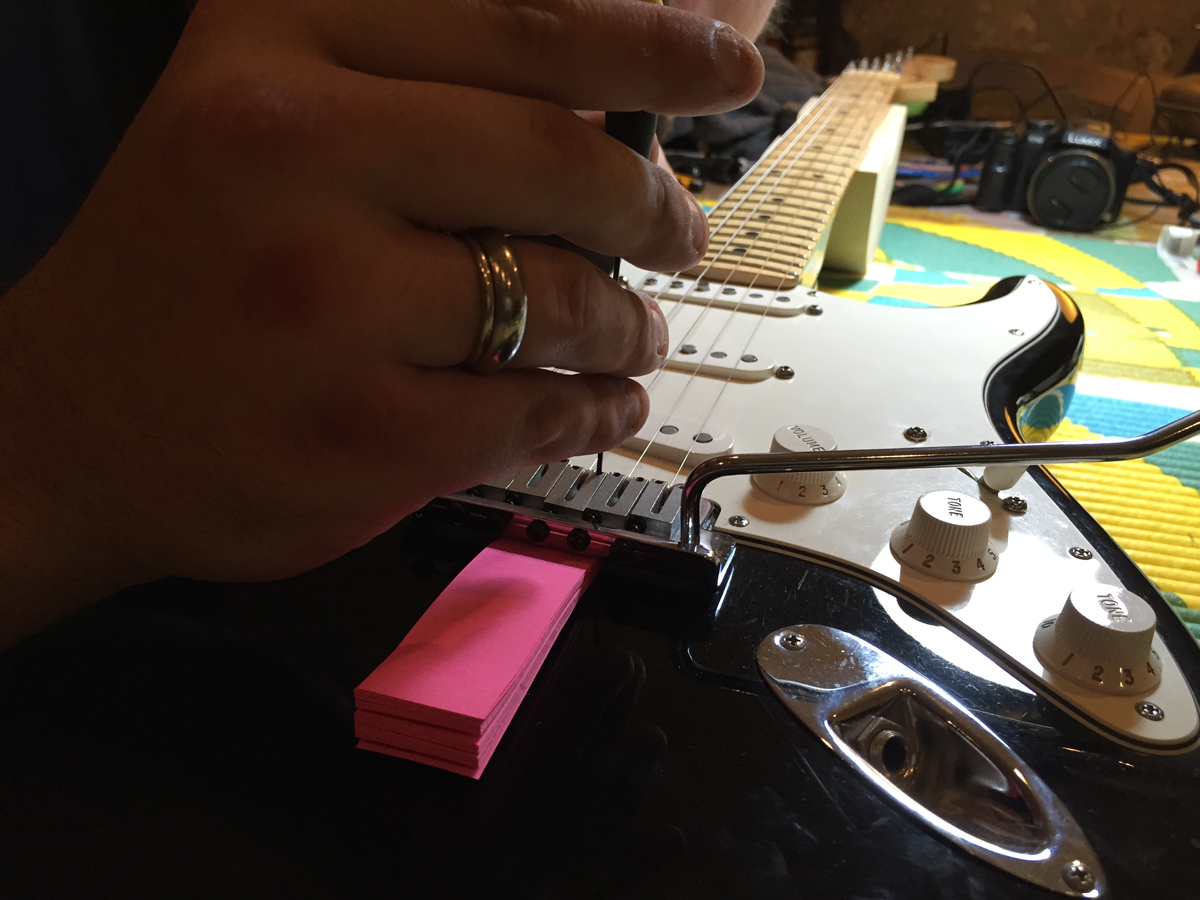
- The fretboard must always have minimal relief. On the electric guitar the amount of relief is similar on average (to give a certain reference) to the thickness of a 0.23 mm card, placed between the top of the 10th fret and the bottom of the mi cantino) held down at both ends. But on the bottom it is identical to the thickness of a business card positioned in an identical way.
- The higher the action, the greater the volume of the instrument and the more dynamic you can apply when playing.
- The lower the action, the less your setting and technique will tend to benefit from the dynamics.
- The height of the nut and the relief of the fretboard, respectively, have the greatest influence on neck comfort, not string height at the bridge. As a result, a neck with an almost straight fretboard and high strings at the bridge will be more UNIFORMLY comfortable and in tune than a neck with a very curved (concave) fretboard and low strings at the bridge.
- Very radiused fretboards (7", 9") require higher action so that the strings do not stop during bending, while the wider the radius of the fretboard the lower the action possible without impact on bending.
- The greater the string's gauge, the smaller the relief of the fretboard and string height at the bridge can be to avoid scratching and still have a comfortable action.
- The larger the diameter of the string, the more you can keep the neck straight (more comfort) and the strings higher and still have a comfortable action and a lot of volume.
- The more energetic the touch, the greater the relief of the fingerboard and the height of the strings at the bridge must be in order not to rustle. Less energetic the less touch can be the relief of the fretboard not to rustle.
- A lower relief of the fretboard must correspond to a higher height of the strings not to whisper.
- If the fretboard is too curved, the strings will buzz on the last frets.
- If the fretboard is too straight, the strings will buzz on the first frets.
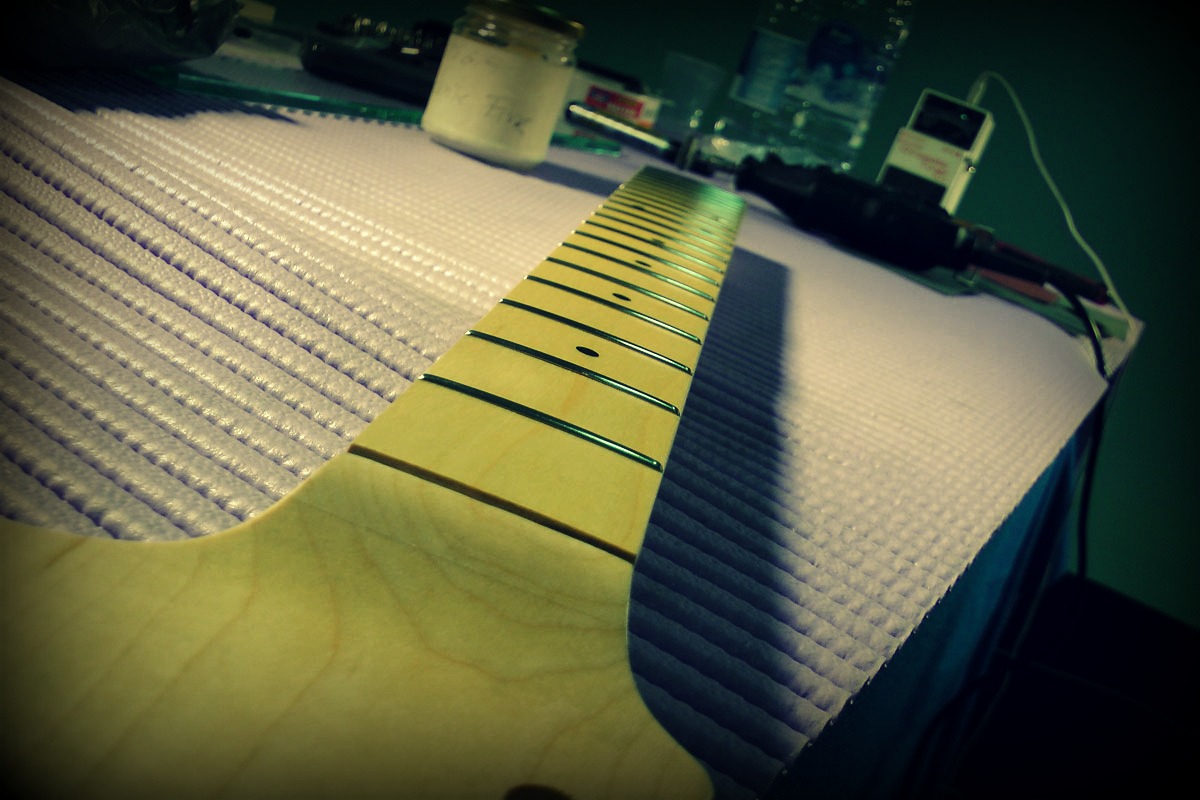
Having the frets dressed by a pro guitar repairman guarantees a lower action
and a fast and confortable feel on the fretobard. .
and a fast and confortable feel on the fretobard. .